Culpeper's Case
Designing a tactile, community-led kiosk to support social inclusion in a community garden

Overview
Culpeper Community Garden in Islington, London, is a public space created from disused land to provide garden plots for local residents, alongside a shared green space for schools and the wider community. The garden follows organic principles and is named after the 17th-century herbalist Nicholas Culpeper.
The community is made up of garden workers, plotholders, and volunteers. It is a sociable space, with regular shared activities such as arts and crafts, mindfulness sessions, plant sales, and communal cooking using produce grown on site. Education is a central part of the garden’s identity, both through weekly workshops and the informal sharing of knowledge between members.
This project was a group design brief to create a novel interactive technology that could enhance the social fabric of a local community. My co-designers were Melissa Keen, Thüdy Nguyen, and Aisha Hussain.
My approach
I made the initial introduction to the Culpeper community and acted as the main liaison with garden staff throughout the project.
Empathise
I volunteered at the garden to build rapport with community members before carrying out field observations with another group member. These focused on understanding existing relationships, routines, and informal learning practices.
I then conducted interviews with several community members to complement our observations and identify opportunities for deeper engagement. Alongside this, I researched the history of the garden and its namesake, Nicholas Culpeper, whose work emphasised open access to herbal knowledge.
Define
Rather than attempting to formalise or control existing social interactions, we reframed the problem around strengthening relationships between visitors and established community members.
We identified education and knowledge-sharing as an existing strength of the garden, and a promising foundation for meaningful engagement.
Ideate
As a group, we ran several ideation sessions, with me producing a range of sketches to explore different interaction concepts.
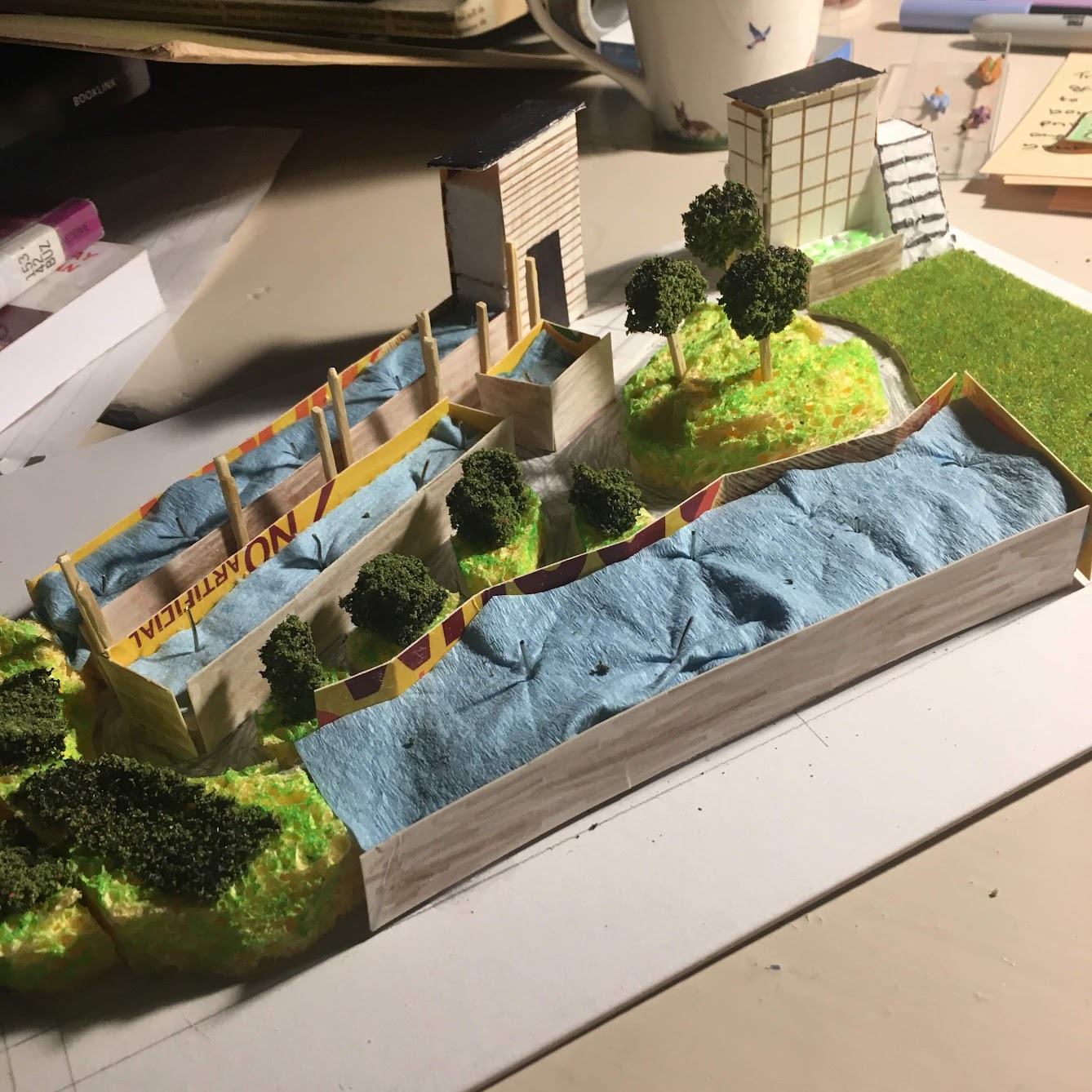
One early idea I proposed was an interactive 3D map of the garden that would allow visitors to listen to stories from plotholders and leave voice notes of their own. I built a small-scale physical mock-up of the garden to explore this idea but determined that the interaction opportunities were limited, and instead as a group we chose to develop a different concept I had suggested: Culpeper’s Case.
Prototype
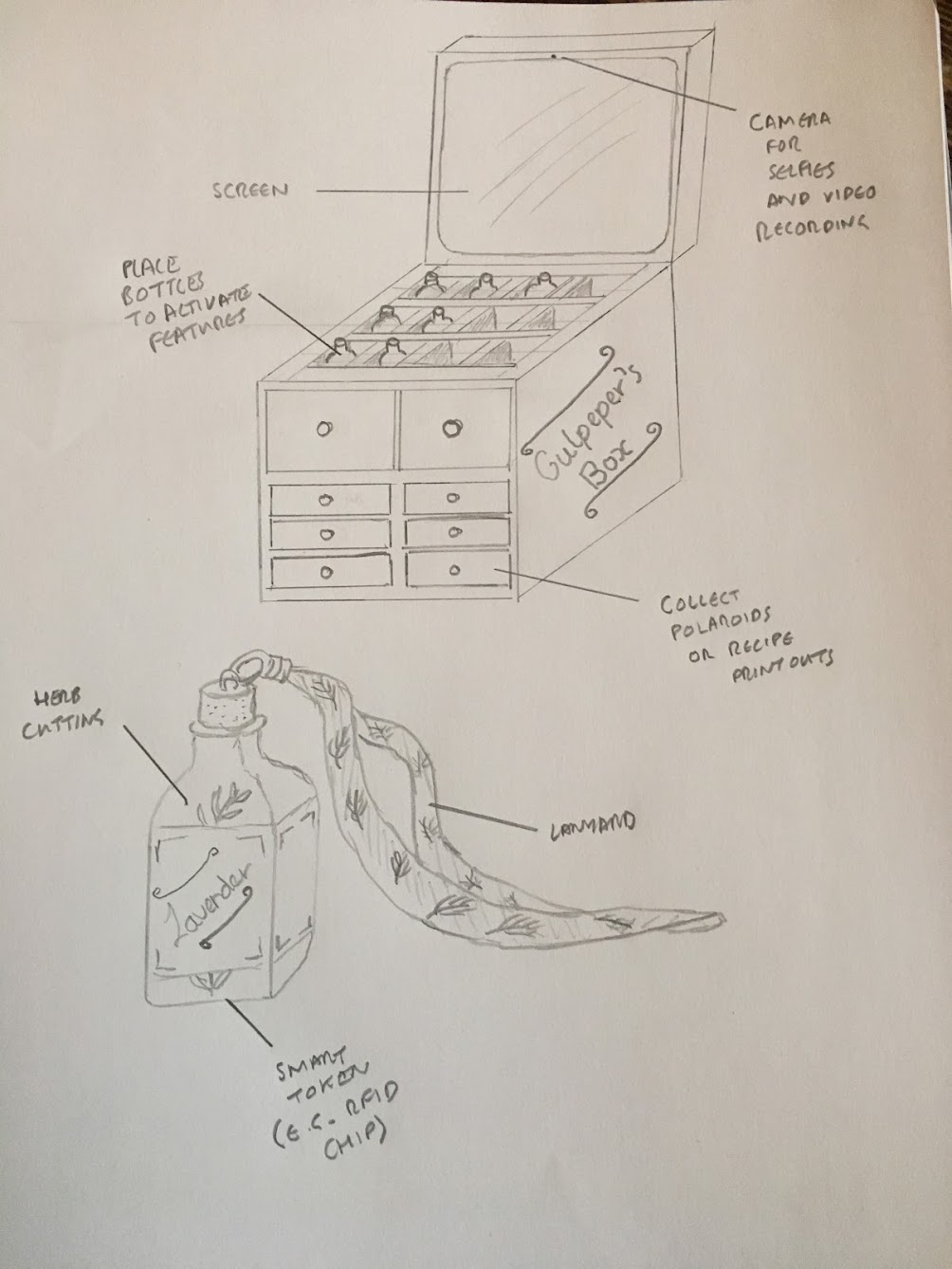
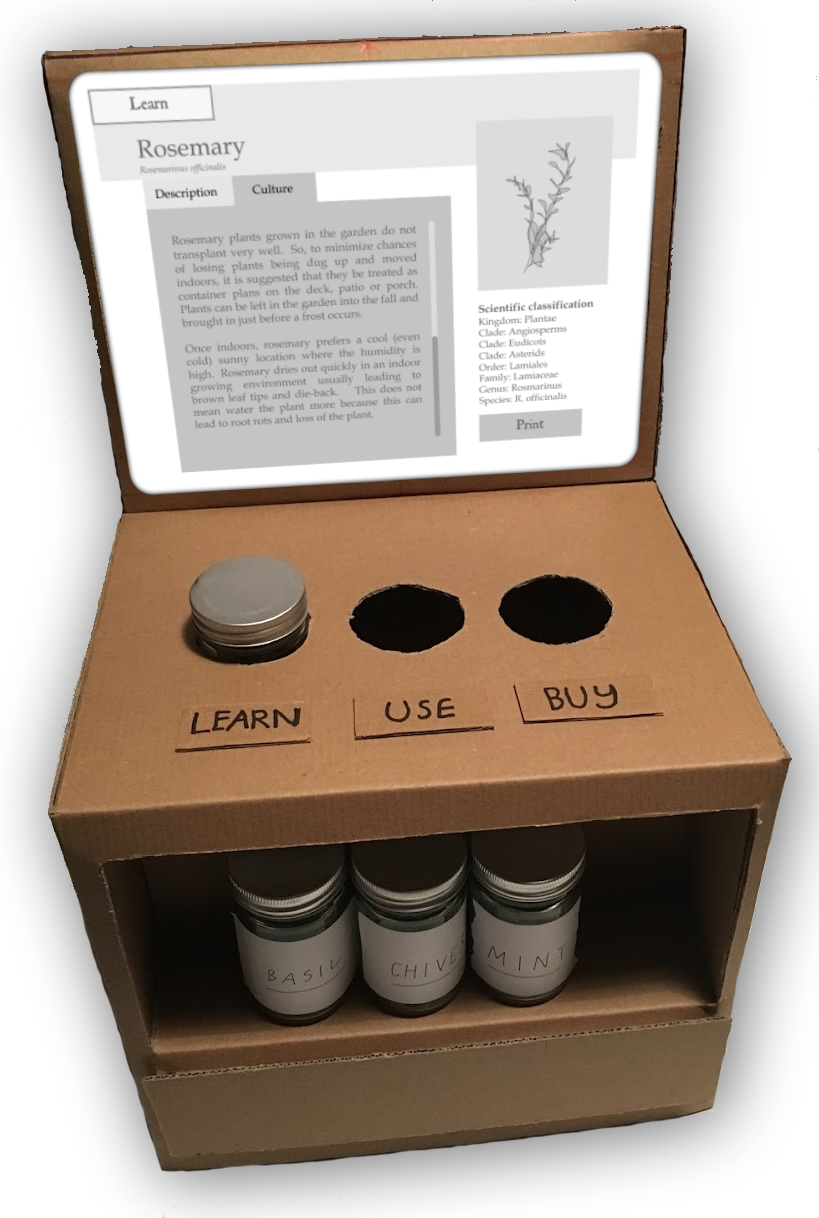
Culpeper’s Case is a physical, herbalist-style cabinet with an integrated touchscreen. It allows visitors to:
learn about herbs grown in the garden
explore recipes and historical uses
reserve herbs for purchase from the garden shop
The design combines a tactile, analogue interface — herb bottles used to switch between functions — with a digital touchscreen for exploring content. The system was designed so content could be updated by garden staff using an iPad in the office.
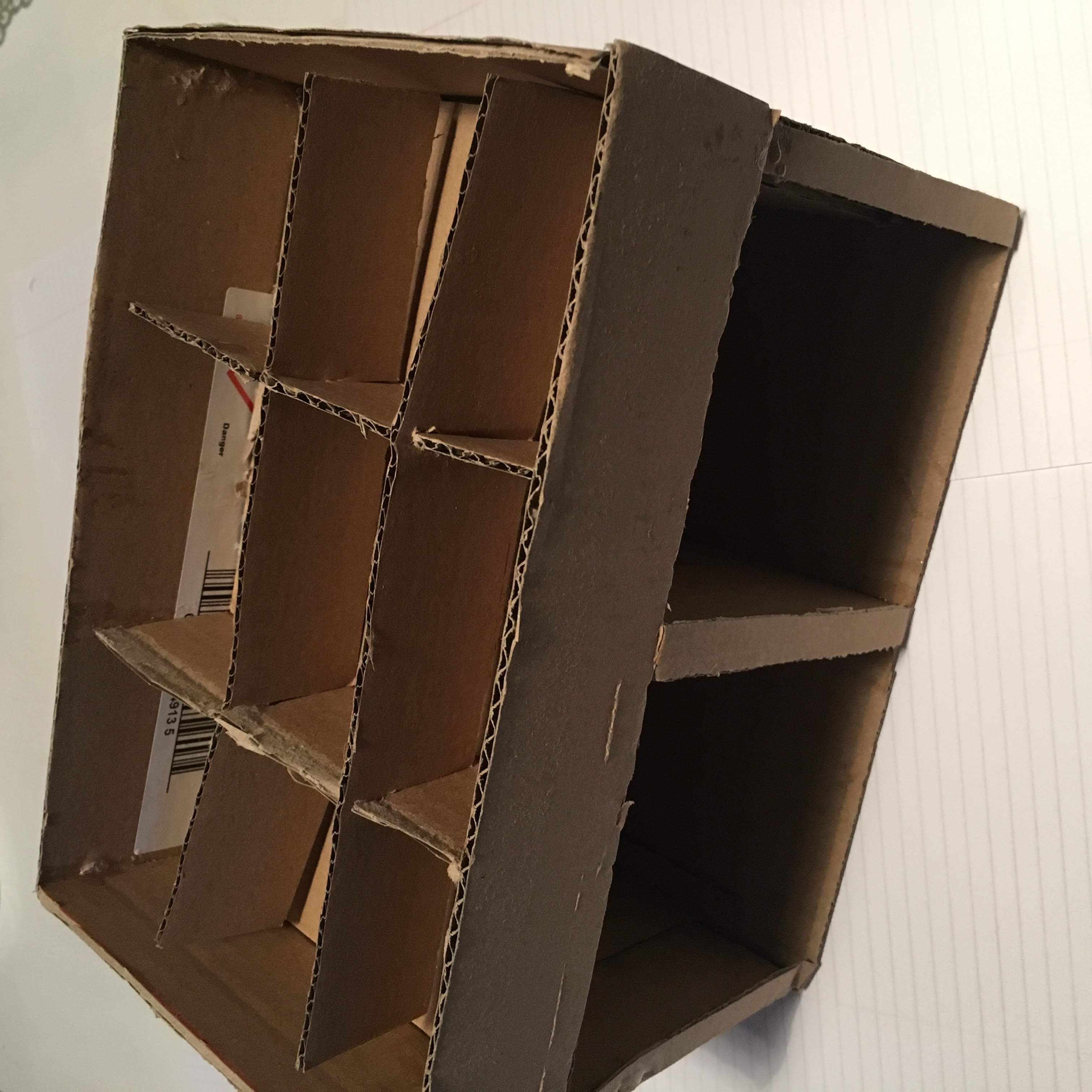
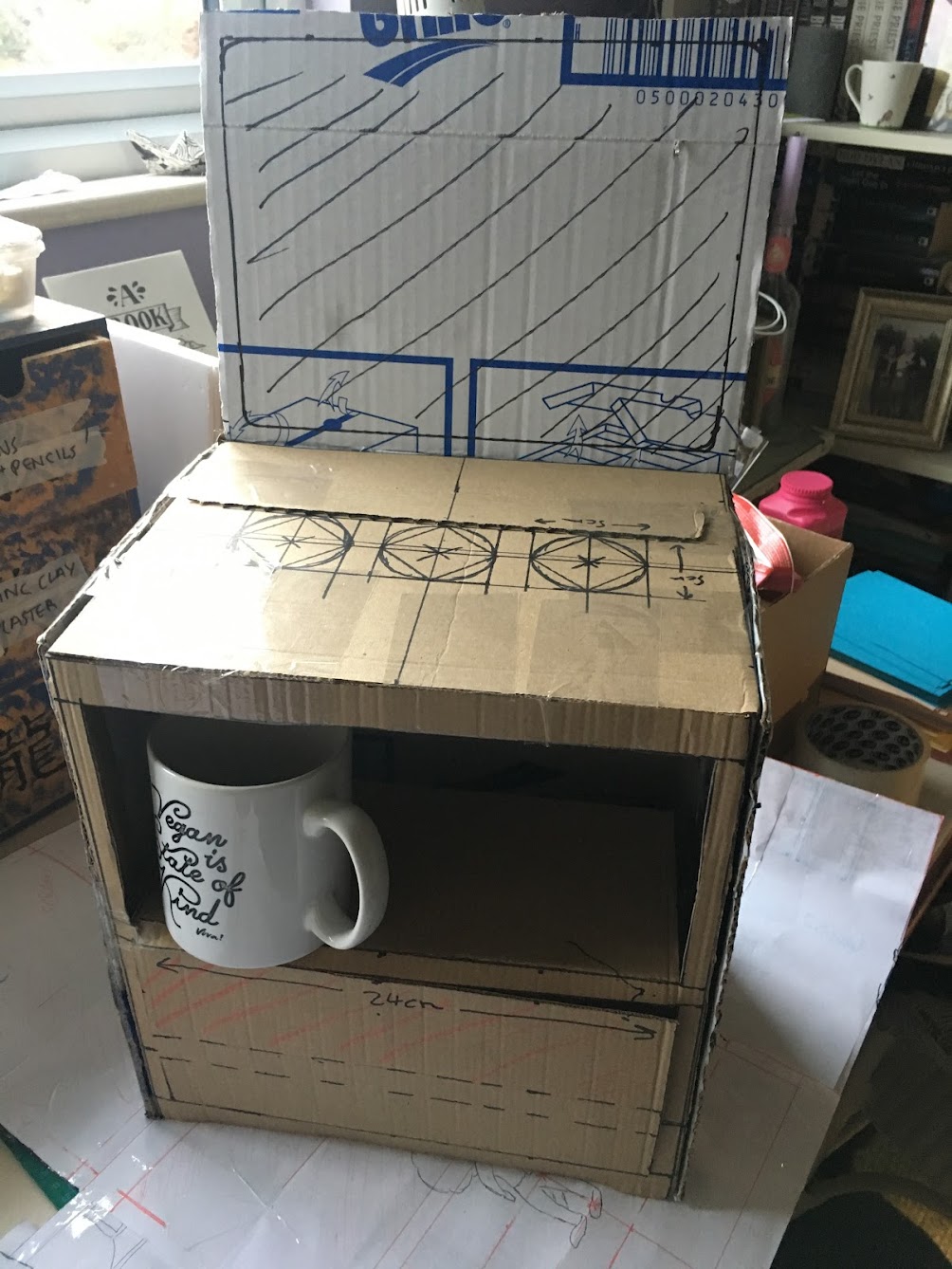
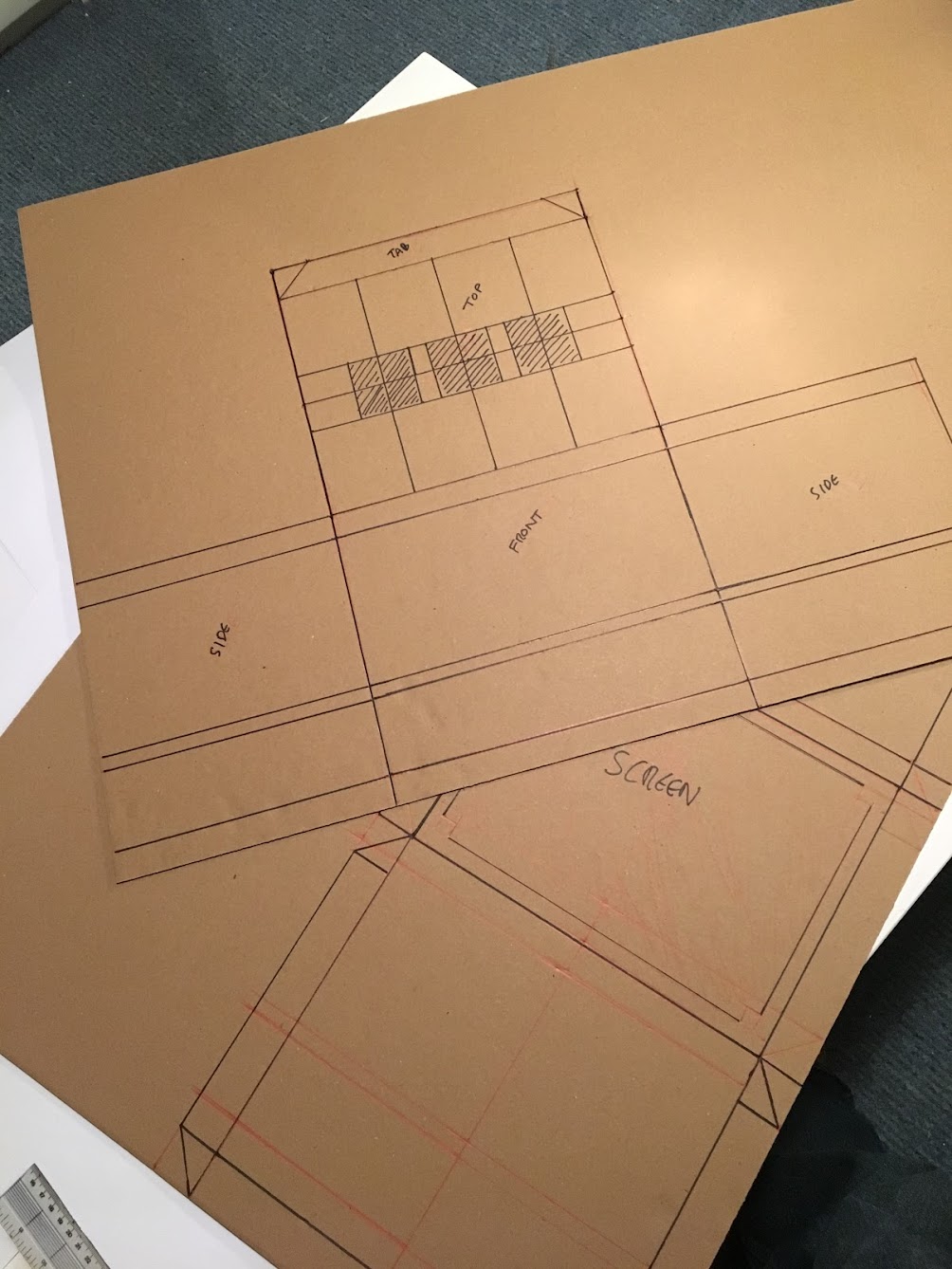
I scratch-built a full-scale cardboard prototype of the case, initially as a rough structural model and later as a more refined version. It was designed to allow paper UI screens, created by another group member, to be easily inserted and swapped during testing.
Test
I moderated usability testing sessions with three members of the garden community, using the cardboard prototype and paper wireframes. These sessions focused on understandability, physical interaction, and overall fit within the garden environment.
What I delivered
Project documentation (timeline, consent forms, observation protocol, interview guide)
Community interviews and field observations
A full-scale cardboard prototype of Culpeper’s Case
Moderation of usability testing sessions
Contributions to synthesis and the final written report
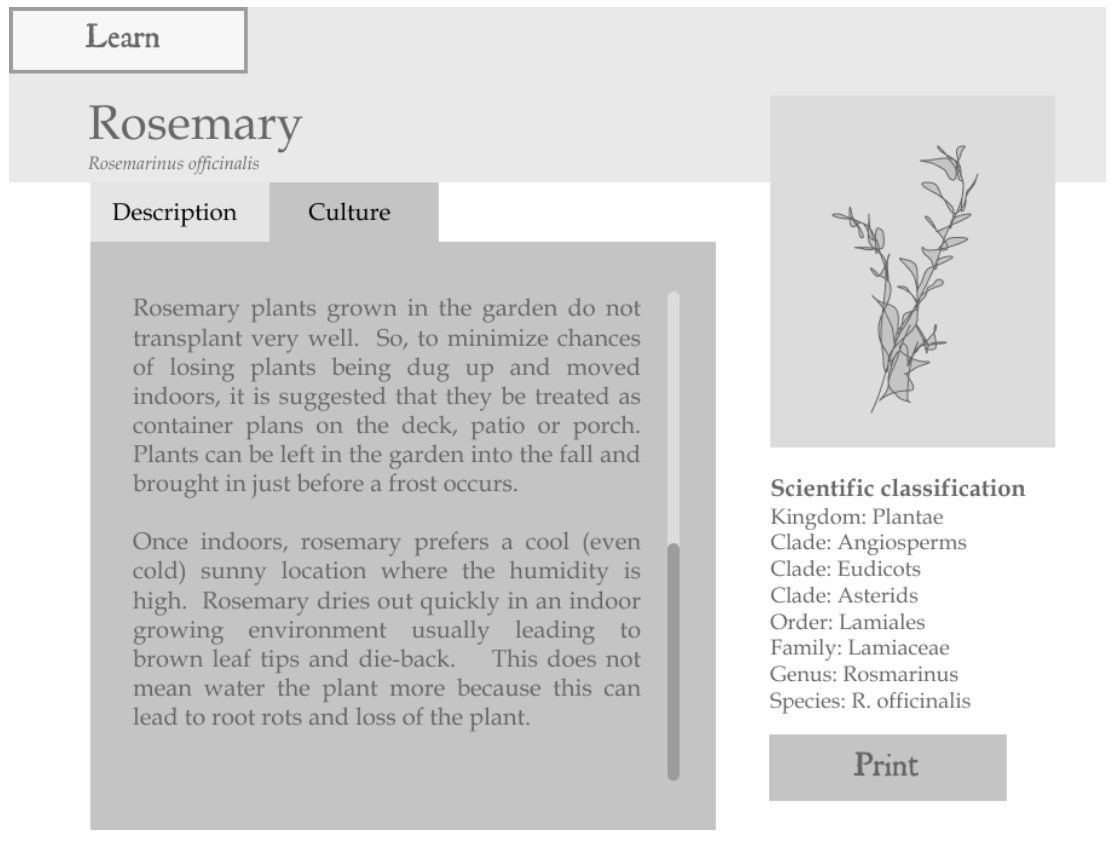
Other group members led on personas, user journeys, and digital wireframes, to which I contributed feedback. The UI wireframes and final project poster shown were designed by Thüdy Nguyen and Melissa Keen respectively.
.jpg)
Impact
The prototype was warmly received by members of the garden community, who appreciated its tactile nature and its alignment with the garden’s educational ethos.
Usability testing also surfaced valuable limitations, including:
localisation challenges
a cognitive disconnect between analogue and digital interactions
visual disruption caused by the placement of herb bottles near the screen
While these issues were not resolved within the scope of the project, they could inform future research, including several directions we did not have time to explore, such as:
mixing herbs to discover new recipes
using the case as a shared photo or “selfie” point
incorporating augmented reality to help identify plants in the garden
Reflection
This was a challenging project, requiring us to design something robust enough for an outdoor environment without introducing technology that felt intrusive or out of place. The garden is valued as a space for quiet reflection and recuperation, and the design needed to respect that.
I’m particularly proud of the physicality of the prototype and the way it draws inspiration from Nicholas Culpeper’s commitment to shared, accessible knowledge. The project reinforced my interest in tactile, participatory design and in technologies that support social connection without demanding attention.
I’m grateful to my collaborators for their care and creativity throughout the project, and to the garden manager, Mandy Graham, for trusting us with the opportunity to work alongside her community.